Maternal Mentors: South Africa’s Overlooked Economic Asset
Why Women’s Month should recognise the full value of community-based women’s leadership
South Africa keeps talking about solving youth unemployment from the top down, while making it unnecessarily difficult for many of the women already solving parts of it from the ground up.
We have become very good at measuring need, identifying poverty, vulnerability, hunger and unemployment. We can count the number of people who require support, track socio-economic indicators and quantify the scale of our challenges. What we have become far less effective at recognising is capability, specifically the capability of women who are already helping to solve many of those challenges every day.
It is a vital distinction, because the way we classify people influences the way we invest in them. If we see someone primarily as a recipient of support, our instinct is to ask what they need. If we see them as a partner in development, we ask more pertinent questions:
- What knowledge can they share?
- What barriers are preventing them from doing more?
- What would happen if we helped them power more work that is already producing results?
This Women’s Month, that distinction deserves greater attention. National Women’s Day on 9 August commemorates the march of more than 20,000 women to the Union Buildings in 1956. Their protest challenged legislation that restricted their freedom, but it also challenged the way society valued women’s voices, judgement and contribution.
Nearly 70 years later, we observe Women’s Day – and Women’s Month in August – to recognise the resilience, courage and sacrifice of millions of women in South Africa. These women hold families together, strengthen communities and continue showing up every day.
Women constitute just over half of South Africa’s population (around 51%), and approximately 42.1% of households are female-headed. So, many women play dual roles as primary economic providers and parents or “home managers” simultaneously. And in rural villages, townships and urban communities, extraordinary women are doing far more than many people realise.
They run early childhood development centres and care for vulnerable children and older people. They provide meals where there would otherwise be none, teach sewing, baking, gardening, crafts and other skills that can create economic opportunities. They mentor young people and give women and young adults the knowledge to start businesses where few opportunities exist.
And they do it out of the spotlight, in the wings, as advocates and champions. Still, despite their impact, these women are rarely recognised as economic contributors. They are viewed through a single lens: as beneficiaries of support and development. But the women we so often describe as beneficiaries of development may, in fact, be delivering it.
The poverty narrative is not wrong. Poverty, hunger, vulnerability and inequality confront us daily. But when poverty becomes the only story we tell, we overlook capability, resilience and initiative.
The work women do in development centres is usually classified as community work. Beneath that description, however, there is also significant economic development taking place.
As South Africa searches for ways to address unemployment, strengthen entrepreneurship and improve youth employment, we should consider the possibilities that early childhood development centres are hiding in plain sight.
Obviously, their purpose is to provide a safe, nurturing environment for children. Beyond the obvious, parents can work because someone they trust is caring for their children. Young people gain practical experience by volunteering or working at the centre.
Skills programmes create pathways into small, medium and micro enterprises (SMMEs), which drive South Africa’s economy by making up more than 90% of formal businesses, employing roughly 50% to 60% of the national workforce and contributing between 34% and 40% of gross domestic product.*
Local suppliers also benefit from food purchases, sewing projects and gardening initiatives. One intervention can support several different forms of economic participation. The same principle applies across countless community projects.
Teaching someone to bake is not only about baking. Teaching someone to sew is not only about sewing, and helping a young person prepare for work is not only about mentorship. Each activity creates the possibility of income, employment or enterprise. Collectively, they are building blocks for the economy.
I have had the privilege of working with women like these for many years. They run care centres, feed children and older people, teach practical skills, mentor young adults and help families through periods of unemployment and hardship. Their compassion is remarkable, but compassion alone does not explain the value of what they do.
The women connecting the dots for our communities are seldom recognised as part of their local economic infrastructure. Their standing does not come from a title. It comes from the confidence families place in them and the consistency with which they respond to local needs.
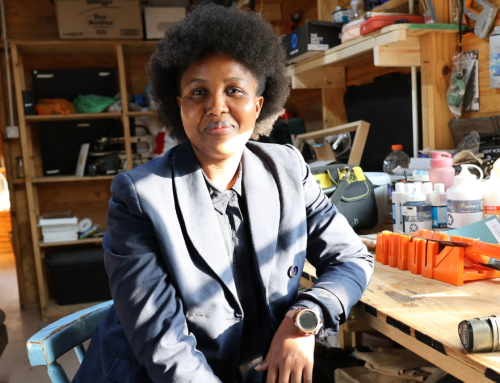
In Women’s Month, the wider burden carried by women should be recognised, and their contributions noticed. A Mama from Clover Mama Afrika may be responsible for her own household while also running a centre that cares for dozens or even hundreds of other people. She manages staff, meals, facilities, training, community concerns and the constant search for resources.
Doing this work often involves administrative obstacles that limit how many people they can help. One Mama may need approval to expand her centre. Another may need equipment, transport or help meeting compliance requirements. A delay that appears administrative on paper can mean fewer children accommodated, fewer people trained and fewer opportunities created.
These caregivers, mentors and protectors of their communities have the will and the experience to achieve more when we invest in them.
Their work has grown from years of practical experience, trusted relationships and an ability to turn limited resources into opportunities for others. Better access to equipment, funding, business support, partnerships and decision-makers would allow that work to reach further.
That is a practical investment in local economic capacity.
By Rika Haasbroek, Corporate Social Investment Manager at Clover Mama Afrika
About Clover Mama Afrika
Clover Mama Afrika is a sustainable Corporate Social Investment project that has been in existence since 2001. Over the years the project has hosted 1,917 training sessions with skills transferred to 16,016 community members over the years. Teaching and guiding strong females (lovingly called ‘Mamas’ due to their standing in their neighbourhoods) in communities all over the country, in order to build their skills and sustain and improve their own community projects. Only the most committed are enrolled and these include women looking after orphans, the elderly and those suffering from HIV/Aids.
Connect with Clover Mama Afrika on social media:
Facebook | Twitter | YouTube