The World Cup audience goes beyond the broadcast
The 2026 FIFA World Cup will attract billions of viewers, but the biggest opportunity for brands may lie with the multi-screen fans consuming more than just the live games, says Leslie Adams, Sales Director at Reach Africa.
The big match is on the big screen and everyone is buzzing. The biltong is sliced, the drinks are ice cold and the people are bringing the gees. It’s a yellow sea of Bafana Bafana jerseys as we support our boys at the 2026 FIFA World Cup. This is the kind of audience and engagement advertisers dream of, with eyeballs glued to the screen for 90 minutes.
And for decades, that paid off handsomely.
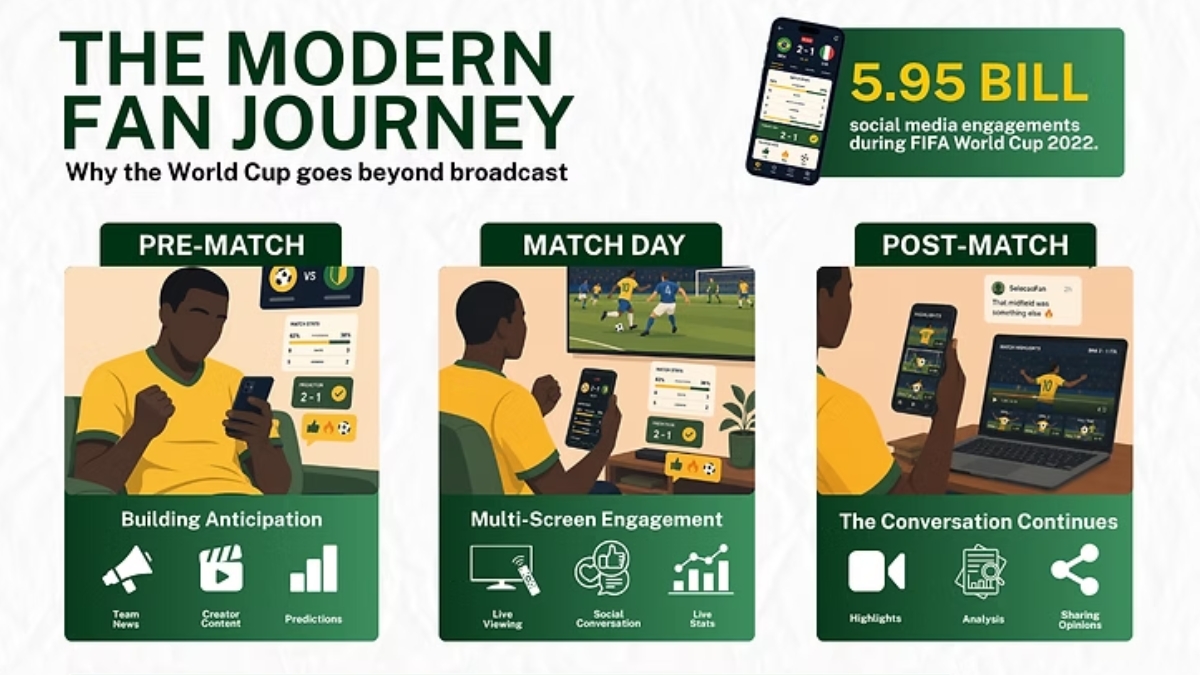
But the 21st century sport fan is no longer just watching the match alone. Before, during and after the game, they’re checking team news on X, watching analysis on TikTok, having WhatsApp watch party debates, and sharing YouTube clips. The final whistle hasn’t even blown, but the conversation has moved well beyond the live broadcast.
In fact, the most influential football journalists are no longer found on television screens, but on social platforms, where team announcements and breaking stories often emerge long before traditional broadcasters report them. The rise of creator-led coverage is also changing how fans experience tournaments. With social media creators increasingly being granted access traditionally reserved for journalists, fans are gaining new perspectives through behind-the-scenes content, player interviews and creator commentary.
For years, brands followed a simple playbook: if you wanted to reach fans, you bought into the live broadcast. That made perfect sense when the only screen available was a TV. But today, while audiences remain just as engaged, their attention is distributed across a far wider range of environments.
Recent data from the Marketing All Product Survey shows the way people consume sport has changed, with streaming and social media now accounting for more time spent than traditional television, particularly among younger, mobile-first audiences. FIFA has adapted quickly to this by putting the game where audiences are, rather than locking it into one media channel. They’ve followed the data and partnered with TikTok as an official social media partner, YouTube as a global streamer, and niche sports apps to expand the tournament’s reach across the platforms fans already use.
The live game is no longer the only place where the action is, and smart brands will follow FIFA’s example and update their planning to include a broader mix of channels. And while broader streaming distribution may challenge the traditional broadcast monopoly, it also gives fans more choice and greater access to the tournament than ever before.
The biggest audience opportunity might be everything happening around the live broadcast, from the build-up to reactions and commentary. There are so many opportunities for brands to engage with fans that were simply not possible years ago.
This includes connected TV (CTV), which is increasingly at the centre of the global viewing experience. As fan consumption habits have evolved, so too has the television itself. Connected TVs now bring broadcaster apps, streaming services, gaming and linear TV together in one place, allowing fans to access the full spectrum of football content and viewing experiences on the largest screen in the home.
For brands planning around the 2026 FIFA World Cup, the first step is knowing the sheer number of viewing options available to consumers. If you’re not already social savvy, get scrolling, because each platform presents a different opportunity to connect with your audience.
Then, figure out what role each environment plays in the audience journey and where your brand can best fit – perhaps it’s partnering with a content creator who gives analysis and commentary, or sponsoring a podcast for deeper discussions, or harnessing Instagram with viral reactions and memes.
The golden metric is attention, especially in a global event such as this one. With such a large audience, meaningful engagement is the true measure of success, not just eyeballs.
Most importantly, brands need to think beyond the broadcast. It remains incredibly powerful, but it is no longer the only place where fandom lives. Find the fans, and you’ll find where the real action is. The game is on.
About Reach Africa
Reach Africa is a leading Connected TV (CTV) specialist simplifying access to premium CTV audiences across Africa. Operating across Smart TV OEMs, streaming platforms and broadcaster environments, Reach Africa enables scaled, brand-safe Advertising Video on Demand (AVOD) and Free Ad Supported TV (FAST) campaigns through a single buying layer. By reducing fragmentation across the ecosystem, Reach Africa helps advertisers plan, buy and measure CTV more effectively, while supporting sustainable revenue growth for platform and content partners.
For more information, please visit the website.