Short documentary ‘Pappa Kitsch’ investigates the authenticity of a Tretchikoff painting
Authentic or not. A story it certainly is. That is precisely why Stefanus Nel documented his investigation from the outset to determine the authenticity of a Tretchikoff painting he purchased online.
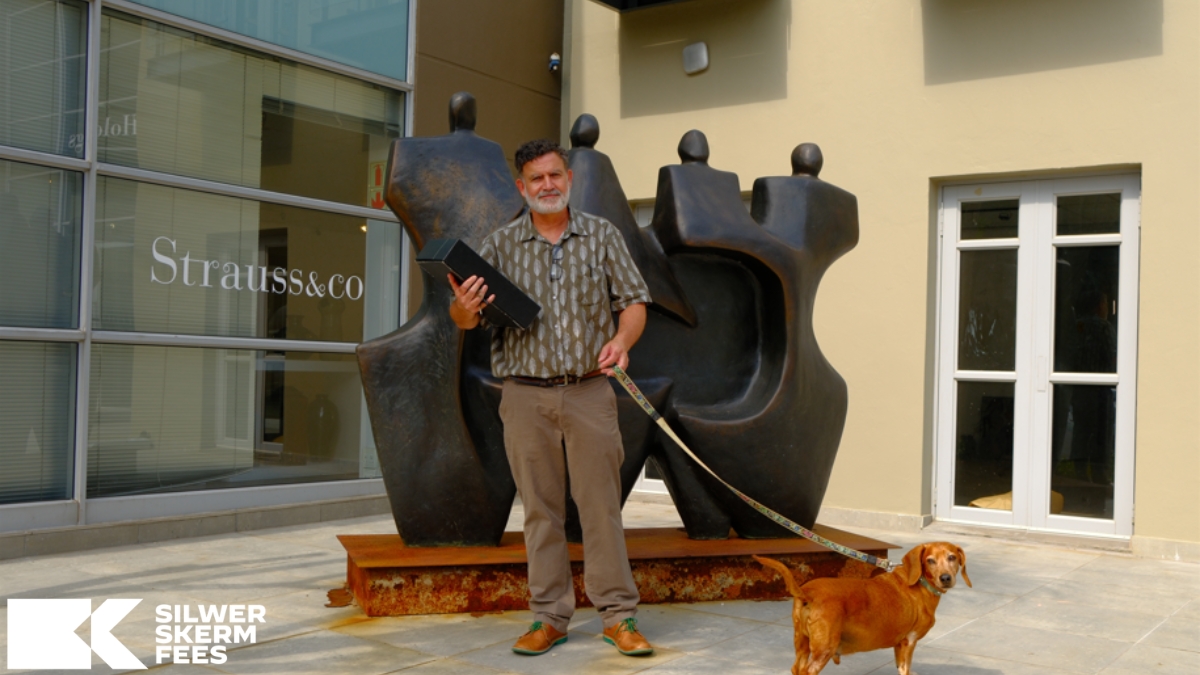
The short documentary film Pappa Kitsch, which screens at the end of August at the kykNET Silwerskerm Festival in Cape Town, tells the story of Nel’s purchase of an oil painting by Vladimir Tretchikoff – once known as the father of kitsch, but whose work now sells for millions of rand.
Part of his purchase was a scrapbook from an earlier period of Tretchikoff’s career. Nel, a former journalist and content creator, had his curiosity well and truly piqued. And together with his anxious dachshund, Rocky, he embarked on a journey, knocking on the doors of experts and specialists to investigate the painting’s authenticity. In the process, he also shows the viewer that the concept of something’s value extends far beyond mere rands and cents.
Questions for Stefanus Nel, co-director (and main character)
Tell us how the idea took shape.
From day one, I knew there was a story behind the book and the painting. The more research I did, the more questions arose. I lay awake many evenings wondering how the puzzle fits together. At some point I told Adam Heyns (Cape Town filmmaker and co-director) about it, and he was just as excited to get to the bottom of it. We got together regularly and discussed the project. I read everything I could about Tretchikoff, and his story only made me more curious.
Are you a bit of a hoarder? Because your garage looks a little full…
I had a Bidorbuy problem and bought all manner of things I didn’t really want or need. Fortunately, the painting and book were among them. I bought things I believed had a story behind them – like an interesting medal, photographs, oh, anything that at some point meant something to someone. I have a strong imagination, so I can, for example, easily picture how the young long-distance athlete felt when he received his silver medal in 1935.
This is the first time you have entered the world of documentary film. Tell us more about your background and where your curious nature comes from.
I am a journalist who moved into the advertising industry. I have always loved stories and ideas. I also love art and have always been fascinated by Tretchikoff’s life. He was also an advertising man, and his work was not merely beautiful – there was always a concept woven into it.
It is quite a gamble to tackle a genuine “investigation” as a film, because you never know how it will unfold. How does the planning work? What was the biggest challenge?
We had no idea how the story would unfold. The only planning we could do was to set up interviews with people and hope that they would participate. We were fortunate that everything just fell into place. The biggest challenge was figuring out what we would do if key figures refused to be part of the documentary.
Tretchikoff and South Africa – and South Africans – have quite a history. Elaborate on this.
Tretchikoff was not received with open arms by the art world. On the contrary, they made it difficult for him to even exhibit his art. The irony is that he came from a place – Singapore – where he was famous and regularly appeared in the newspapers. His work was widely acclaimed. He essentially had to start from scratch in South Africa. The art world and the public’s opinion of Tretchikoff differed vastly. The art critics criticised and dismissed his work, while the public queued to acquire a Tretchikoff print.
Tell us about the experience of working with people from the art world. Is it easy for just anyone to determine the value of a painting or heirloom that sits somewhere gathering dust?
Art experts were very reluctant to make a decision about whether the painting is authentic or not. That is understandable, because their reputation is at stake – if a painting is sold and it later emerges that it is not authentic, it can turn into a hell of an ordeal. It has happened before, so I think they tend to be cautious.
Do you have anything else up your sleeve?
I am busy refining an idea for a documentary that I hope to enter for the Silwerskerm Festival next year.
The 14th kykNET Silwerskerm Festival will be held from 19 to 22 August in Camps Bay, Cape Town. Tickets for the films, as well as the prestigious awards ceremony on Saturday 22 August, are available via Quicket.
The full kykNET Silwerskerm Festival programme can be viewed online here.
The kykNET Silwerskerm Festival is sponsored by the City of Cape Town, Vuma, the Dagbreek Trust, Village ’n Life, and the National Film and Video Foundation (NFVF).
Stay up to date with the latest Silwerskerm Film Festival developments on social media:
Facebook | Twitter | Instagram | Hashtag: #Silwerskermfees
Visit the kykNET website and join the conversation on Twitter, Instagram, TikTok and Facebook.