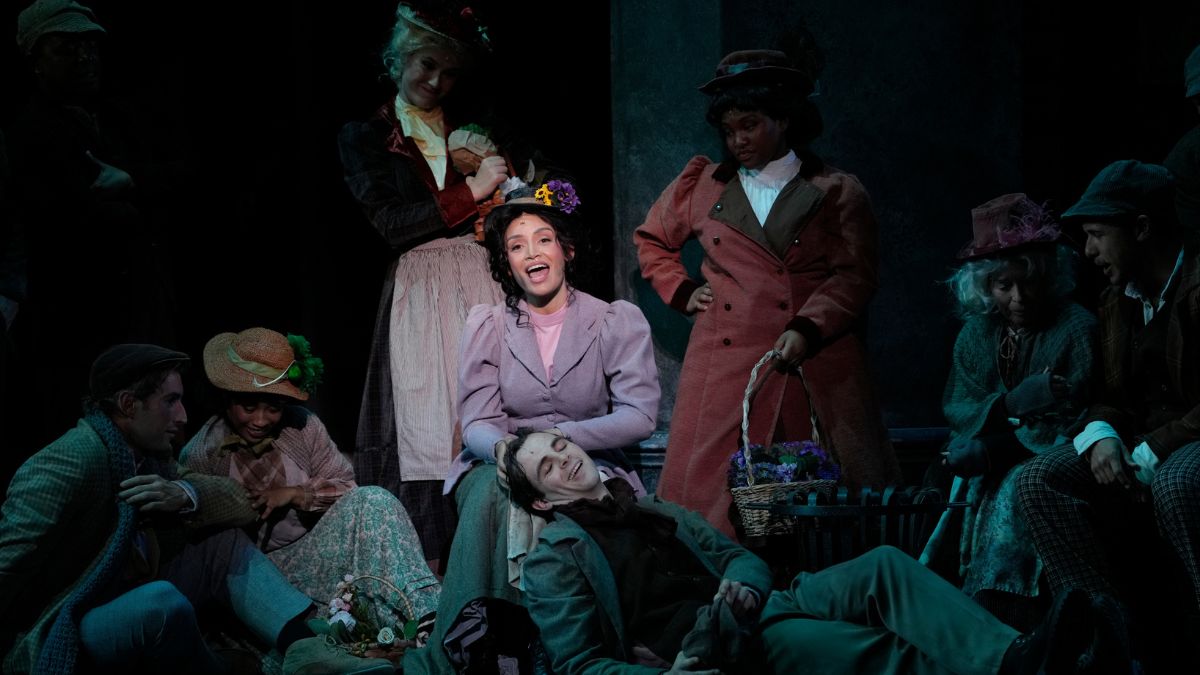
A Timeless Classic Returns with the New Staging of My Fair Lady
Pieter Toerien with Cape Town Opera present the classic musical My Fair Lady based on George Bernard Shaw’s play Pygmalion, which premiered on Broadway in 1956 and became an instant hit, featuring music by Frederick Loewe and lyrics by Alan Jay Lerner. The story follows Eliza Doolittle, a Cockney flower girl, and Professor Henry Higgins, a phonetics expert who bets that he can transform her into a lady of high society by teaching her proper speech.
As Higgins embarks on a mission to transform Eliza into a refined lady, their unlikely partnership sparks a series of witty exchanges, heartfelt moments, and unforgettable musical numbers including songs like “Wouldn’t It Be Loverly?,” “I Could Have Danced All Night,” “On the Street Where You Live,” “Get Me to the Church on Time,” and many more.
We caught up with Eliza Doolittle (Brittany Smith) ahead of the productions opening at the Artscape this week.
Eliza Doolittle is one of musical theatre’s most iconic roles. What drew you to this part, and how are you making it your own in this production?
I channel a little bit of myself into Eliza – I was a hot mess while attending university until I had to learn how to wring it in – and to think it all started with a little bit of red lipstick and a scarf Professor Virginia Davids gave to me before a singing exam . So going from young and wild and climbing trees to being elegant in a ball gown really made me think: “I wonder what it would be like if I had to portray this in a role …” and what it would be like to portray in the character of Eliza Doolittle ; and here we are a few years later.
Eliza undergoes an enormous transformation in both speech and character. How did you prepare to portray such a shift, especially capturing her Cockney accent versus her refined speech?
Claire Belaine really helped with that. I’ve always had a knack for being silly and speaking in different accents to entertain my family but never had strict dialect coaching up until a few productions ago required me to have them done. I view accents as musical entities – I listen to inflections within an accent and see how they are written on a stave. Then .. practice, practice, practice until it sits within my body and it because a tight marriage between my tongue, brain, body and voice.
Eliza’s journey from a flower girl to a “lady” raises questions about identity and class. How do you interpret her feelings about this transformation, and how do you portray her internal struggles on stage?
Being a coloured female landing lead roles in productions that wouldn’t easily see someone like me portray these roles , I bring a lot of how I was treated with respect to this exact thing . I use a lot of my treatment as a person of colour to this day as the basis of my “sauce”. If I need to be making this character real and relatable how else am I to do this other than zoning in on my own experiences.
What’s the most challenging part of performing iconic songs like “I Could Have Danced All Night” and “Wouldn’t It Be Loverly,” which audiences already have high expectations for?
I think the challenge here is to just let it be related to as real. No fluffies added . Plain and simple to what she is experiencing and how she is bringing it across.
Eliza is a strong, determined character who also shows vulnerability. How do you balance these traits to make her relatable and authentic?
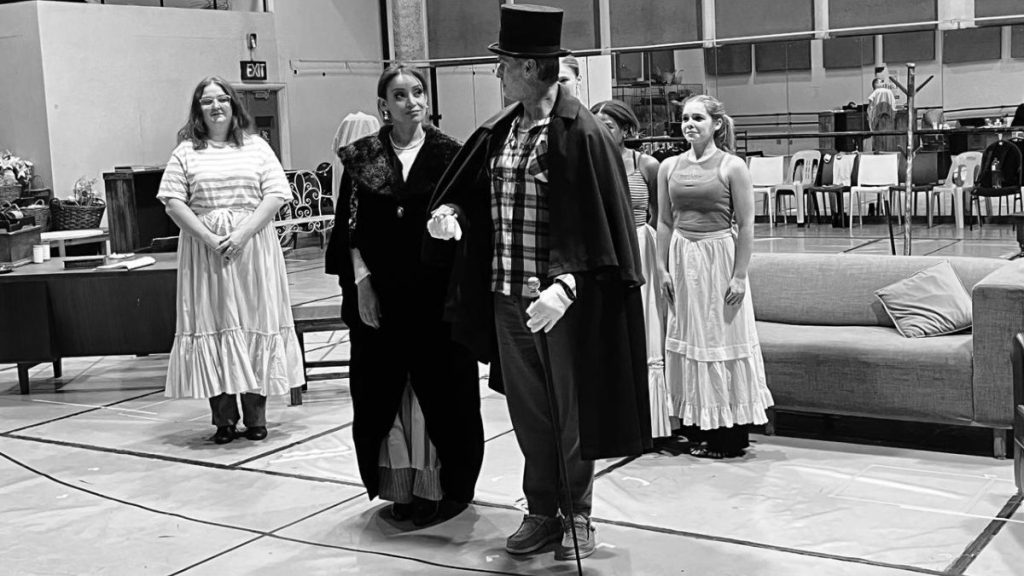
I always experiment within the rehearsal room to see how far I can go regarding her vulnerability. It is easy playing a strong, determined character but to do that while portraying vulnerability is difficult – I allowed myself to cry during the rehearsal process so that I could feel her presence through my singing or acting and once I zoned in on it I could pull back and play around with taking and giving – almost like dangling a carrot . It could very easily become cringe if it’s overplayed but I think that with Steven reminding us to be real at all times , sets a precedent for us to be grounded within her vulnerability while she is being the strong character we all admire and love. You must make her human.
Eliza’s story addresses issues of class, identity, and independence. How do you interpret these themes in the context of today’s audiences?
Eliza’s story, as depicted in Pygmalion and My Fair Lady, remains remarkably relevant to contemporary audiences. I interpret the themes of class, identity, and independence in today’s context by dividing it into categories.
Class
- Social mobility: Eliza’s transformation from a flower girl to a refined lady highlights the challenges of social mobility. Today’s audiences can relate to the struggles of navigating different socio-economic environments.
- Classism and elitism: The story critiques the classism and elitism prevalent in Eliza’s time. Modern audiences can recognize these same biases persisting in various forms, such as systemic inequality and privilege.
- Performance of class: Eliza’s journey shows how class is often performed, with certain behaviours, mannerisms, and speech patterns serving as markers of social status. This theme remains relevant in today’s world, where social media often presents curated versions of oneself.
Identity
- Self-discovery: Eliza’s transformation forces her to confront her own identity and desires. Contemporary audiences can identify with the struggle to find one’s authentic self-amidst societal expectations.
- Agency and autonomy: Eliza’s growth is marked by her increasing agency and autonomy. Today’s audiences can appreciate the importance of self-determination and making choices that align with one’s values.
- Intersectionality: Eliza’s experiences as a working-class woman highlight the intersections of class, gender, and identity. Modern audiences can recognize the complexities of intersectionality and how it shapes individual experiences.
Independence
- Financial independence: Eliza’s desire for financial independence is a driving force behind her transformation. Today’s audiences can relate to the importance of economic self-sufficiency.
- Emotional independence: Eliza’s journey also involves developing emotional independence, as she learns to rely on herself rather than others for validation. Contemporary audiences can appreciate the value of emotional autonomy.
- Empowerment through education: Eliza’s education and personal growth empower her to make choices and take control of her life. Today’s audiences can recognize the transformative power of education and personal development.
Eliza’s story offers timeless themes that continue to resonate with contemporary audiences (I think). The struggles of navigating class, identity, and independence remain universal and relatable, making Eliza’s story a powerful exploration of the human experience.
This timeless tale of transformation and class divides has captivated audiences for generations, and this new production brings a fresh perspective to the beloved story, featuring stunning sets, dazzling costumes, and a talented cast.
The stellar cast includes: Craig Urbani as Henry Higgins, Graham Hopkins as Colonel Pickering, Mark Richardson as Doolittle, Sandi Dlangalala as Freddy Eynsford-Hill, Adrienne Pearce as Mrs Higgins, Namhla Thuka as Mrs Eynsford-Hill, Megan Spencer as Mrs Pearce, Ryan Flynn as Harry, and Gareth Meijsen as Jamie.
My Fair Lady is Directed by Steven Stead with Musical Direction by Kevin Kraak, Choreographed by Duane Alexander, and Scenic design by Greg King.
My Fair Lady is a must-see for theater lovers and fans of classic musicals alike.
Production images taken by Nardus Engelbrecht.
Show Information
Cape Town:
Artscape Theatre Centre
12 December 2024 to 12 January 2025
Times:
Tuesdays to Fridays at 19h30;
Saturday at 14h30 & 19h30;
Sunday, 15 December at 17h00; Sunday, 22 & 29 December at 14h00 & 18h00
Sunday, 5 & 12 January at 14h00 & 18h00
Ticket Prices:
From R140 – R580 (including VAT)
Bookings:
Webticket or Artscape Dial-a-seat on 021 421 7695
Johannesburg:
The Teatro, Montecasino
23 January – 23 February 2025
Times:
Tuesdays to Fridays at 19h30;
Saturday at 14h30 & 19h30;
Sunday 26 January at 17h00; Sunday 2, 9 & 23 February at 14h00 & 18h00
Ticket Prices:
From R240 – R580 (including VAT)
Bookings:
Webticket or the Theatre Box Office (011) 511 1988
Age Restriction:
No Children under 3
Duration:
Approx. 2.5 hours (with interval)
Connect with Pieter Toerien Productions on social media:
Facebook | Twitter | Instagram | YouTube | TikTok
Connect with Montecasino on social media:
Facebook | Instagram | Twitter
Connect with Artscape on social media:
Facebook | Twitter | Website