South Africa’s New Culinary Vanguard: The Chefs Defining a New Era of Dining
For more than two decades, South Africa’s culinary identity has been shaped by a handful of visionary chefs who placed the country firmly on the global gastronomic map. Figures such as Luke Dale-Roberts, David Higgs and Jan Hendrik van der Westhuizen proved that South African restaurants could stand confidently alongside the most respected kitchens in the world. Through discipline, creativity and relentless ambition, they built the foundations of a modern South African dining culture.
But every culinary movement eventually gives way to the next generation.
On 23 February, the 2026 LUXE Restaurant Awards offered a glimpse into that future, celebrating a group of chefs whose work signals the beginning of a new era for South African gastronomy. Rather than being defined by a single dominant figure, this new generation feels collective. It is shaped by collaboration, shared inspiration and a generation of chefs who grew up admiring the pioneers before them while now confidently shaping their own culinary language.
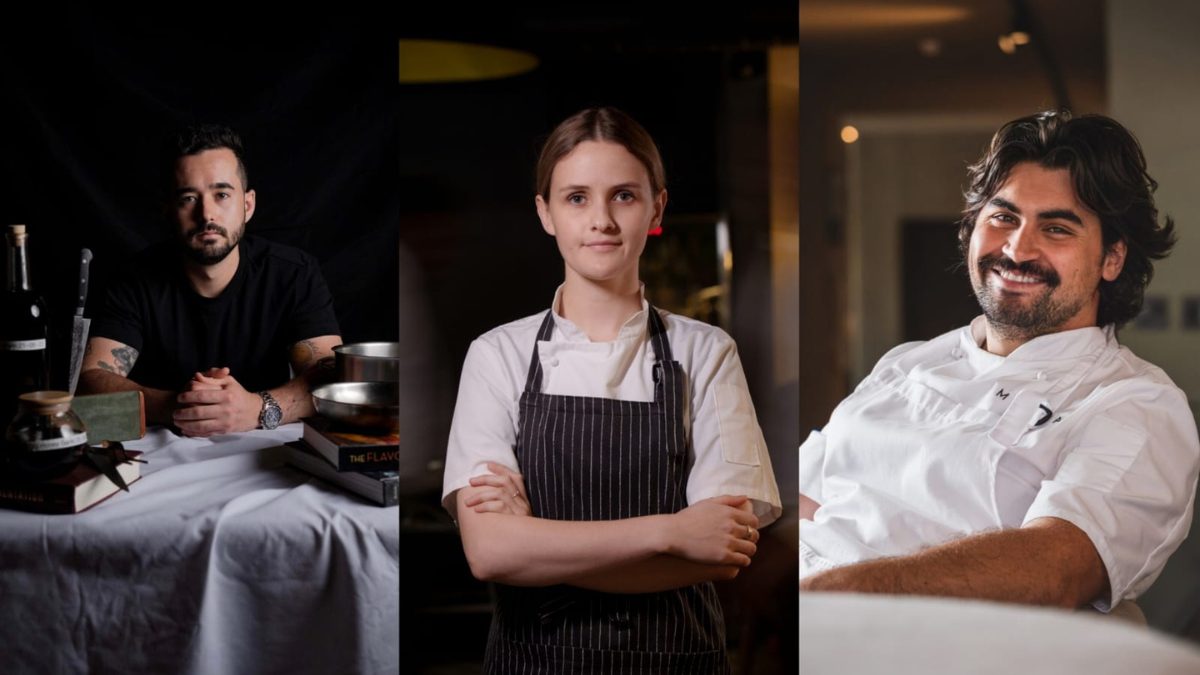
Few chefs embody that continuation more clearly than Carla Schulze of Salon Restaurant, who was named Chef of the Year. Schulze represents a compelling extension of South Africa’s culinary lineage. Having refined her craft under Luke Dale-Roberts, one of the architects of the country’s fine dining renaissance, she carries forward a philosophy rooted in precision, discipline and creative integrity. Yet at Salon, her cooking feels entirely her own. There is elegance and clarity in her dishes, a sense of restraint that allows ingredients to speak while still delivering moments of quiet surprise.
If Schulze represents the continuation of that lineage, then chefs like Matt van den Berg represent a confident expression of it. At MERTIA Restaurant, van den Berg has quietly built one of the most compelling dining destinations in the country. When MERTIA was named Restaurant of the Year at the LUXE Restaurant Awards, it felt less like a discovery and more like a confirmation of what many diners had already begun to recognise.
What makes this moment particularly meaningful is the human story behind it. Schulze and van den Berg are close friends, part of a generation of chefs who have grown alongside one another, sharing ideas, inspiration and the inevitable challenges of building ambitious restaurants. Their success reflects not only individual talent but also the collaborative spirit that defines this new culinary era.
That same spirit can be felt in Stellenbosch, where van den Berg and chef Callan Austin are both contributing to what many now consider one of the most exciting culinary regions in the world. Long known for its wine estates and dramatic landscapes, Stellenbosch has increasingly become a laboratory for modern South African gastronomy.
At DUSK Restaurant, Austin has emerged as one of the country’s most inventive culinary thinkers. Recipient of the Culinary Innovation Award, his work pushes the boundaries of flavour, technique and storytelling. Dining at DUSK often feels like stepping into a space where food, art and curiosity intersect. Yet even within that experimentation, there remains a deep respect for local produce and seasonality, grounding his creativity in the landscapes that surround the restaurant.
Elsewhere, another kind of culinary storytelling is unfolding through the work of chef Nic Charalambous at Ouzeri Restaurant. Named the Culinary Rising Star, Charalambous has introduced South African diners to a vibrant interpretation of Greek and Cypriot cuisine that feels both deeply personal and universally inviting. What began as intimate pop-up dinners has evolved into one of Cape Town’s most talked-about restaurants, a testament to the growing appetite for food that celebrates heritage while embracing the ingredients and energy of its surroundings.
Even within pastry, a discipline that has quietly undergone its own renaissance in modern gastronomy, new voices are redefining the role dessert plays within the dining experience. Among them is Arno Ralph, recognised as Pastry Chef of the Year. Now serving as Executive Pastry Chef at Ladurée Cape Town, the iconic Parisian pâtisserie that recently opened its first African boutique at the V&A Waterfront, Ralph represents a rare bridge between South Africa’s culinary landscape and the traditions of global pâtisserie. His career includes leading the Chocolate Academy South Africa and representing the country on international pastry stages, bringing both technical mastery and creative curiosity to the craft. In a dining culture where dessert has often been treated as an afterthought, Ralph is part of a generation restoring pastry to its rightful place as a centrepiece of culinary expression, proving that the final course can be just as memorable and meaningful as the first.
Taken individually, each of these chefs represents a remarkable culinary voice. Taken together, they reveal something far more significant. South African cuisine is entering a new chapter, one shaped by chefs who grew up within the foundations laid by the pioneers before them but who now feel empowered to reinterpret those ideas for a new era.
Their menus move fluidly between cultures, techniques and traditions. Local produce remains central, but it is interpreted through a global lens that reflects the increasingly international experiences of South Africa’s young chefs. Perhaps most importantly, this generation appears less interested in hierarchy and more invested in community, celebrating one another’s successes while collectively raising the standard of what South African dining can be.
By recognising these chefs and their restaurants, the LUXE Restaurant Awards is not simply celebrating excellence in hospitality. It is capturing a moment of evolution within the country’s culinary story.
The pioneers who first placed South Africa on the global dining stage changed how the world saw South African cuisine. Now, a new generation is beginning to define what the next chapter will look like.
And if the chefs emerging today are any indication, the future of South African gastronomy has never looked more exciting.