FIFA Fever Meets the Collectibles Economy: Global Brands Are Betting Big on Licensed Play
The countdown to the FIFA World Cup 2026 is accelerating, and global brands are preparing for more than a sponsorship race. They are positioning for a far bigger commercial opportunity unfolding inside the global collectibles market.
From blind-box toys and limited-edition figurines to retailer exclusives and licensed capsule drops, collectibles have become one of the fastest-growing extensions of sports fandom.
FIFA generated a record US$7.57 billion during the 2019-2022 World Cup cycle, fuelled by sponsorships, retail and licensing partnerships tied to the tournament’s global reach. At the same time, the broader licensed sports merchandise market is forecast to grow beyond US$50 billion over the next decade as brands chase younger consumers through more interactive forms of fandom.
Sabina Hujdurovic, Marketing Manager APAC, Middle East & Africa at ZURU, says:
“What has changed is not the appetite for sports merchandise. It is the format consumers now gravitate toward. Mini collectibles are increasingly one of the most commercially valuable, and football is now sitting at the centre of that shift.”
She adds that traditional products such as replica jerseys and scarves are increasingly sharing space with collectibles built around surprise mechanics, rarity, social sharing, and repeat purchasing behaviour.
“The rise of blind-box culture has transformed collectibles from a niche toy category into mainstream consumer behaviour, particularly among Gen Z and younger millennial audiences.”
That evolution is precisely why companies like ZURU are doubling down on licensed sports collectibles ahead of the next World Cup cycle.
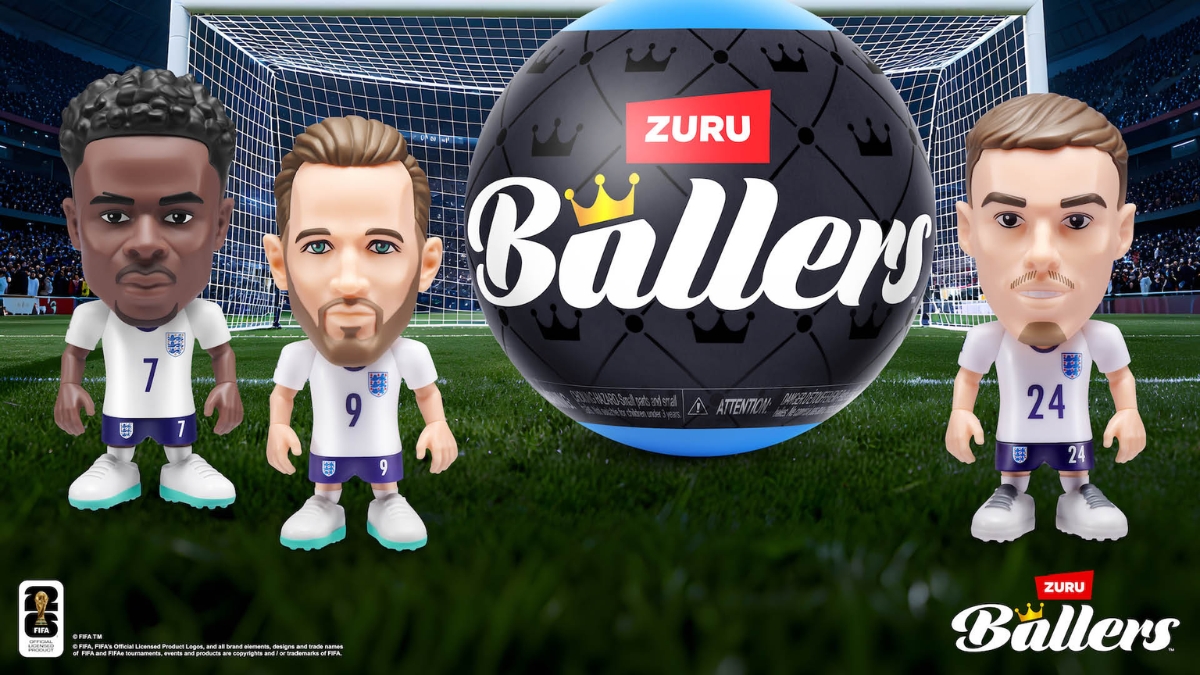
“Following the success of the NBA Ballers range, which generated more than 120 million TikTok views globally and saw rare figures resell for more than US$1,000 on secondary marketplaces, ZURU is now expanding the format into football through FIFA WORLD CUP 2026™ Ballers. The product line positions football fandom inside the mechanics of modern collectible culture rather than functioning as conventional merchandise; the range leans into scarcity, surprise unboxing, collectability, and social engagement.”
Some industry observers have even described Ballers as “the trading cards of collectibles,” reflecting the growing overlap between toy culture, gaming psychology, and sports fandom.
“Consumers are looking for more than merchandise,” she says. “They want participation.”
Hujdurovic adds:
“The growth of collectibles globally shows that fans want products that create interaction around the sport, whether that’s collecting, trading, displaying, or sharing online. Football naturally amplifies that because the FIFA World Cup already carries such a strong emotional connection across generations and markets.”
The timing is commercially significant, she notes.
“The FIFA World Cup 2026 will span 16 host cities across the United States, Canada, and Mexico, creating one of the largest cross-market consumer engagement opportunities the sports industry has seen.”
“For retailers, collectibles linked to events of this scale offer something increasingly difficult to manufacture organically: sustained anticipation,” she adds. “Unlike traditional merchandise cycles, collectibles drive repeat store visits, social conversation, and completion behaviour.”
“The local response has reinforced the scale of the opportunity,” adds Hujdurovic. “Checkers alone has consistently sold more than 400 Fifa Ballers capsules per week since launch in January 2026.”
She notes that consumers rarely buy once.
“They return searching for rare editions, missing characters, or limited variants,” she says. “That behaviour has become especially valuable in a retail environment where consumers remain price-conscious but still spend on products tied to emotion, identity, and community.”
“The World Cup creates a unique licensing platform because the audience is already emotionally invested before the product even launches,” says Hujdurovic. “When licensing is done well, products become part of how fans experience the event itself, not just memorabilia attached to it.”
“The licensing economy surrounding the World Cup is no longer driven purely by apparel or sponsor visibility,” she explains. “Increasingly, the growth is coming from products designed for participation, collectability, and cultural relevance long before the first whistle blows.”
“That distinction is reshaping how brands approach global sporting events,” she concludes. “In that environment, collectibles are no longer sitting adjacent to sports culture; they’re becoming part of it.”
ZURU FIFA Ballers are available online and at leading retailers and specialist toy stores for R299 per capsule. There are 42 to collect in the series, featuring top players from across the globe. The collection is packed with collectible figurines featuring players like Lionel Messi, Harry Kane and Kylian Mbappe, and they include 7 rare frozen moments and 2 super-rare figures.
About ZURU Toys
ZURU is a global consumer products and toy company known for its disruptive innovation, fast-to-market product development, and category-defining brands. Founded in New Zealand, the company has grown into one of the fastest-growing toy manufacturers in the world, with operations across more than 30 global offices and distribution in over 120 countries. The company’s portfolio includes globally recognised brands such as Mini Brands™, Rainbocorns™, XSHOT™, Bunch O Balloons™, Snackles™, and Ballers™, alongside strategic licensing partnerships with some of the world’s biggest entertainment and sports properties.
For more information, visit the website.